When Should You Rent a Scissor Lift Versus a Boom Lift in Victoria, TX?
When Should You Rent a Scissor Lift Versus a Boom Lift in Victoria, TX?
Scissor lifts and boom lifts both provide elevated work platforms, but they differ in reach, maneuverability, and terrain capability. In Victoria, TX, selecting the right aerial platform depends on your project's height requirements, obstacles, and ground conditions.
How Do Scissor Lifts and Boom Lifts Differ in Function?
Scissor lifts move straight up and down, while boom lifts extend horizontally and vertically to reach over obstacles and access difficult angles.
Scissor lifts use a crisscross mechanism to raise the platform vertically. This design provides a stable, spacious work area ideal for tasks that require multiple workers or materials at height, such as ceiling installation, HVAC work, or warehouse maintenance.
Boom lifts feature an articulating or telescoping arm that extends outward and upward. This flexibility allows operators to position the platform over walls, around equipment, or beside structures without moving the base, making them essential for exterior building work, tree trimming, and utility repairs.
Electric scissor lifts operate quietly indoors on smooth, level surfaces like concrete or tile. Rough-terrain scissor lifts with larger tires and higher ground clearance handle outdoor sites with gravel, dirt, or mild slopes.
Boom lifts come in two main types: articulating booms with multiple joints for navigating tight spaces, and telescopic booms with a single extending arm for maximum reach. Both types are available in electric or diesel models depending on the work environment.
Which Projects Require Scissor Lifts?
Scissor lifts excel in applications where vertical reach and a large platform area matter more than horizontal extension or obstacle clearance.
Interior construction and renovation projects benefit from electric scissor lifts, which produce zero emissions and fit through standard doorways. Tasks like drywall installation, painting, and electrical work proceed faster when workers can move freely on a stable platform without repositioning the machine frequently.
Warehouse and retail environments use scissor lifts for inventory management, lighting maintenance, and signage installation. The platform's guardrails and ample space allow workers to carry tools and materials safely, reducing trips up and down ladders.
Outdoor events and facility maintenance often call for rough-terrain scissor lifts. These models navigate grass, gravel, and uneven pavement while providing the vertical reach needed for tent setup, banner hanging, and exterior lighting adjustments.
Scissor lifts typically reach heights between 20 and 40 feet, with platform capacities ranging from 500 to 1,500 pounds. This combination of height and load capacity supports most tasks that occur directly above the machine's footprint.
When Do Boom Lifts Become Necessary?
Boom lifts solve access challenges that scissor lifts cannot, particularly when obstacles block vertical paths or work areas lie beyond the machine's base.
Building exteriors require boom lifts for tasks like window washing, facade repair, and roofline inspection. The articulating arm extends over landscaping, parked vehicles, or ground-level equipment, allowing workers to reach upper floors without moving obstructions.
Tree care and vegetation management depend on boom lifts to position arborists safely among branches. The platform's ability to rotate and extend in multiple directions provides precise control for pruning, cabling, and removal work.
Utility and telecommunications projects use boom lifts to access power lines, transformers, and cell towers. Telescopic booms reach heights exceeding 100 feet, while articulating models navigate around existing infrastructure without requiring road closures or extensive site prep.
Boom lifts also serve construction sites with uneven terrain or limited ground access. Four-wheel drive and oscillating axles keep the machine stable on slopes and rough ground, while the extended reach eliminates the need to reposition frequently.
How Does Terrain in Victoria, TX Influence Equipment Choice?
Victoria's mix of urban development and rural sites presents varied ground conditions that affect aerial platform performance and safety.
Paved surfaces in commercial districts and industrial parks suit electric scissor lifts, which offer quiet operation and zero emissions. These machines work well indoors or on smooth outdoor concrete, where their narrow wheelbases and tight turning radii simplify navigation in confined spaces.
Construction sites with dirt, gravel, or mud require rough-terrain models. Scissor lifts with larger tires and higher ground clearance handle moderate slopes and uneven surfaces, while boom lifts with four-wheel drive and oscillating axles maintain stability on steeper grades and softer ground.
Wet conditions during Victoria's rainy season reduce traction and increase the risk of sinking or sliding. Machines with wider tires or tracks distribute weight more evenly, preventing ruts and maintaining control on saturated soil.
Overhead clearance also matters. Indoor projects with low ceilings or tight doorways limit scissor lift height, while outdoor sites with power lines or tree canopies require careful planning to avoid contact with the boom during extension and retraction.
What Safety Considerations Apply to Each Type?
Operator training, load limits, and environmental factors all influence safe operation of scissor lifts and boom lifts.
Scissor lifts demand attention to platform capacity. Overloading the platform with workers, tools, or materials can cause the machine to tip or fail, especially when extended to maximum height. Always verify the manufacturer's weight rating and distribute loads evenly across the platform.
Boom lifts require operators to monitor swing radius and clearance. The extended arm can strike structures, vehicles, or power lines if the operator misjudges distance or fails to account for wind sway. Establish exclusion zones around the machine and use spotters when working near obstacles.
Wind speed affects both machine types but poses greater risk to boom lifts due to their extended reach and smaller platform area. Most manufacturers recommend ceasing operation when wind speeds exceed 28 miles per hour, as gusts can destabilize the platform or cause sudden movements.
Ground conditions must be assessed before positioning either machine. Soft soil, slopes exceeding the manufacturer's rating, or unstable surfaces increase the risk of tipping. Use outriggers or stabilizers when available, and avoid driving with the platform elevated unless the machine is rated for such use.
Can You Switch Between Scissor and Boom Lifts Mid-Project?
Changing equipment types during a project is possible but requires planning to avoid delays and additional costs.
If your initial equipment choice proves inadequate—such as a scissor lift that cannot reach over a parapet wall—contact your rental provider to arrange a swap. Most companies in Victoria, TX offer flexible terms that allow equipment exchanges with minimal downtime.
Switching from a boom lift to a scissor lift may occur when site conditions improve or when the project phase shifts from exterior to interior work. Electric scissor lifts cost less per day than boom lifts, so transitioning to a scissor lift for finishing tasks can reduce overall rental expenses.
Combining both machine types on larger projects increases efficiency. Assigning a scissor lift to interior tasks while a boom lift handles exterior work allows crews to progress simultaneously, shortening the project timeline and reducing labor costs.
Advance notice improves availability and delivery scheduling. Inform your rental provider of potential equipment changes as early as possible to ensure the replacement machine arrives when needed, preventing idle crew time.
How Do Rental Rates Compare Between Scissor and Boom Lifts?
Daily, weekly, and monthly rates vary based on machine size, power source, and terrain capability, with boom lifts generally costing more due to their complexity and reach.
Electric scissor lifts typically rent for less than diesel or rough-terrain models. Their simpler design and lower maintenance requirements translate to lower daily rates, making them cost-effective for short-term indoor projects.
Boom lifts command higher rates because of their extended reach, articulating arms, and four-wheel drive systems. Telescopic booms with heights exceeding 80 feet cost more than articulating models with shorter reach, reflecting the specialized engineering and transport requirements.
Weekly and monthly rates offer better value for extended projects. If your job spans more than a few days, negotiating a weekly rate reduces the per-day cost and locks in availability, preventing the need to return and re-rent the same machine.
Delivery fees depend on distance and equipment size. Renting from a provider near your Victoria, TX job site minimizes transport charges and allows for quicker equipment swaps or service calls if issues arise during the rental period.
Choosing between a scissor lift and a boom lift depends on understanding your project's access challenges, height requirements, and site conditions. The right aerial platform keeps your crew safe, productive, and on schedule.
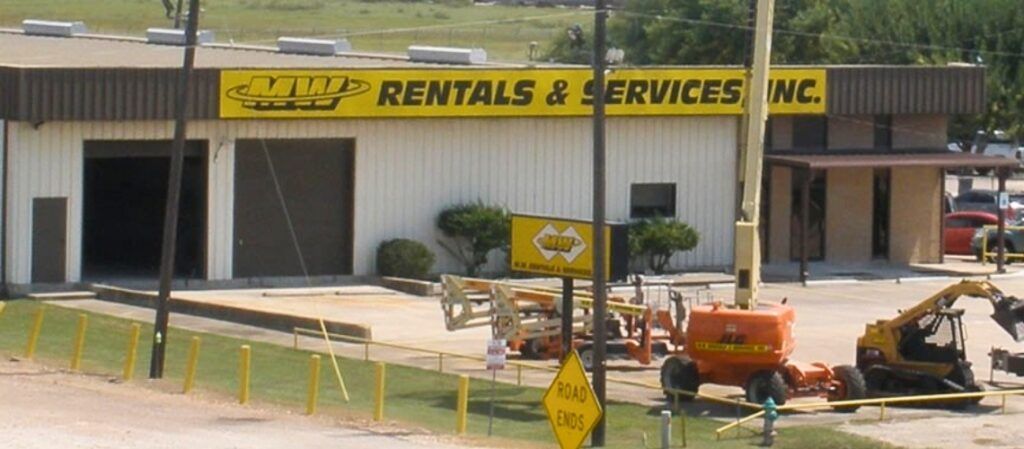
MW Rentals offers scissor lifts, boom lifts, and manlifts for safe and efficient elevated work solutions in Victoria, TX. Plan your next project with aerial work platform rentals in Victoria, TX tailored to your specific needs.